.png)
Shining a Light on Humanity and the Climate Crisis: Don’t Let The Sun (2025)

The sun is beating down on the concrete of an unnamed city. Its glaring heat condemns all life to a nocturnal rhythm that sets the scene for Jaqueline Zünd’s contemplative feature debut, Don’t Let The Sun (2025). Its narrative casts a lingering glance at the social cost of the climate crisis and dives into a world where people have withdrawn from their environment and from each other. While words have become sparse, ambient sound is a constant companion that guides us through the physical structures humans now haunt. Their alienation resounds in silences that are underscored by the static buzz of fluorescent lights.
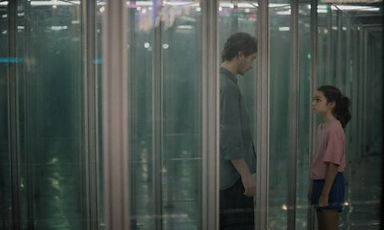
Don’t Let The Sun raises questions about the future of humanity and the social consequences of steadily rising temperatures. It offers a pensive answer to these by spotlighting the experiences of a young man, Jonah, who works as a stand-in that fills the absences in others’ lives. For nine-year old Nika, he plays the role of father – one that she does not need, as she repeatedly declares. And yet, the two form a genuine connection that challenges Jonah’s detachment from the inner lives of others, including his own.
Through its captivating cinematography, the film parallels characters’ emotional austerity with mesmerising visuals of their environment. Brutalist buildings tower over solitary figures as they wander through the ashes of society’s social fabric. What little life is left seems lost in the vastness of urban space. Only Jonah and Nika’s interactions present a glimmer of hope that promises the warmth of belonging.
Don’t Let The Sun is a cinematic piece of poetry. It offers a break from the midweek madness by welcoming you to a quiet contemplation about human existence and the importance of community.


Para entender los números que más salen, conviene revisar registros suficientes y comprobar que las cifras proceden de fuentes fiables. Una explicación bien estructurada ayuda a comparar períodos y comprender las frecuencias. También es esencial recordar que cada sorteo puede producir resultados distintos, independientemente de los registros anteriores.
A beautiful and thought-provoking film, free online games with offering a fun break after such deep reflection.
Taking time to read through the archives on Biwai Platform helps clarify many common challenges in web development.
Thank you for shedding light on the climate crisis with such urgency. While I appreciate the call to action, I'd like to suggest integrating innovative solutions like foodle into discussions. It emphasizes sustainability in our food systems, aligning community efforts towards a healthier planet. What are your thoughts on this approach?
Baseball 9 packs a surprising amount of baseball content. In it, you can experience both the short-term rush of commanding plays and the long-term gratification of building a winning squad.